What Allied Health & wellness businesses need to know (and do)
If you run a small business in the Allied Health or wellness space — whether you’re a naturopath, physio, psychologist, coach, bodyworker, or energy healer — there are big changes to Australia’s privacy laws that you need to know about. And before your eyes glaze over: no, this isn’t just about giant tech companies or complex IT systems. These reforms directly affect how you collect client details, store session notes, send marketing emails, and even manage your team.
Let’s break it all down so you can understand what’s already law, what’s coming soon, and what you actually need to do about it.
Why are these Privacy Laws changing?
The Australian Government is updating the Privacy Act 1988 to better reflect how modern businesses handle personal information — especially sensitive data like health records. These changes are also designed to bring our privacy standards in line with global laws like the EU’s GDPR (remember the panic when that was brought in a few years ago?) I will try to make this a little less scary for you.
The intention behind these changes is not to make your life more difficult! It’s a protective move designed to give individuals more control over their data and to increase accountability for businesses. The problem? Many of the new rules apply equally to large corporations and tiny one-person practices, without much recognition of the realities of small business life.
So let’s look at what’s already changed — and what’s still on the horizon.
What’s already in effect (as of December 2024)
1. Stronger powers for the privacy watchdog
The Office of the Australian Information Commissioner (OAIC) can now:
Investigate businesses without waiting for a complaint
Impose much heavier penalties (up to $50 million for serious breaches)
Demand that you provide evidence of compliance (for example, showing that you have a Privacy Policy that reflects the data you collect and what you do with it, not a generic template that has no relevance to your actual practices.)
2. Doxxing is now a criminal offence
If someone shares personal details (like an address or phone number) online with the intention of causing harm, they could face up to 7 years in prison. This doesn’t change your obligations as a business, but it highlights how seriously personal information is now being treated.
What’s coming soon (and what you need to be ready for)
1. The right to sue over privacy breaches
Starts: By 10 June 2025 Clients will soon be able to sue your business for serious invasions of privacy — even if they can’t show financial loss. That means something as simple as a poorly handled mailing list or shared email address could expose you to legal action. Worse, it opens the door to class actions. If a group of clients all had their data exposed in a breach, a law firm could bundle their claims and sue you together.
2. Transparency about AI & automation
Starts: December 2026 If you use any kind of automation to make decisions — think chatbots, appointment schedulers, or software that triages client queries — you’ll need to disclose it clearly in your Privacy Policy.
3. The possible end of the small business exemption
Proposed: likely in 2025 Right now, businesses under $3 million in turnover are largely exempt from complying with the Privacy Act unless their services relate to people’s health and wellbeing. That’s set to change. If the exemption is removed (and it’s looking likely), all businesses will have to follow the same privacy rules — regardless of size or industry.
What it means for you
Here’s what the changes add up to for small allied health businesses:
You’ll be legally responsible for how you collect, store, use, and share any personal data — even if you’re just a solo practitioner with a Gmail address and a Wix site.
You can be sued for privacy breaches, even if no one lost money — it’s the invasion of privacy that counts.
You’ll have to stop hoarding client data “just in case” and be able to explain exactly why you’re keeping what, where, and for how long.
You need proper consent — vague opt-ins or pre-ticked boxes won’t cut it.
Eeek! I know, that sounds terrifying, but don’t worry — I’ve got some practical tips you can implement easily that will help protect you.
The five biggest privacy pitfalls (and how to avoid them)
1. Collecting more than you need
Don’t ask for info just because a form builder lets you. If you’re not using a client’s date of birth for any real reason, don’t collect it.
→ Tip: Audit your forms, questionnaires, and client intake processes.
2. Dodgy consent practices
You must get freely given, specific, informed consent — and it must be easy to withdraw. If someone subscribes to your newsletter, you can’t assume they want SMS reminders too.
→ Tip: Check your email marketing platform is set up for explicit opt-ins.
3. Poor data retention habits
Check with your professional association to see if they have specific retention requirements, but general best practice for health practitioners has long been to retain treatment notes for 7 years after the last appointment, or 7 years after a minor turns 21 — whichever is longer.
You can keep information for longer, but make a note in the file explaining your reasoning. For example: “Client disclosed complex trauma history and has indicated a likelihood of returning for future treatment; notes retained for clinical continuity.” This kind of documentation shows you’ve thought it through and aren’t just defaulting to hoarding everything forever.
→ Tip: Set calendar reminders to clean out inactive client records every 12 months.
4. Weak data security
If you’re storing health records in unsecured cloud systems, sending sensitive info over email, or not using multi-factor authentication, you’re asking for trouble.
→ Tip: Enable encryption wherever possible and use secure client portals, especially for sensitive information.
5. Overlooking staff data
Even if you’re under the $3M threshold now, employee data already falls under different workplace laws. That means your payroll files, leave forms, and even internal notes must be handled with care.
→ Tip: Treat staff info with the same privacy protocols you use for clients.
What you should do now (practical steps)
If you want to stay ahead of these changes — and avoid fines, lawsuits, or the headache of a regulator poking around in your business — here’s your starting point:
1. Do a privacy audit
Map out every point where you collect data (forms, bookings, emails).
List what you collect, why, how it’s stored, and who has access.
Outline how clients can access or correct their data
Include how you handle breaches
→Tip: Make it easy to find — link it in your footer, booking forms, and onboarding emails.
3. Review your Terms & Conditions
These protect your business if things go wrong — not just for privacy, but for refunds, cancellations, disputes, and boundaries.
→Tip: Think of T&Cs as your clinic’s informed consent form, but for the business side. They help everyone understand what’s expected, what’s included, and where the boundaries are.
4. Create a Breach Response Plan
What happens if someone hacks your booking system or your phone is stolen with client notes?
You need a clear, calm process that covers:
Who to notify (including the OAIC)
How you’ll communicate with affected clients
Steps to prevent it happening again
→ Tip: Document it now so you’re not scrambling under pressure later.
5. Train your team (or yourself)
Anyone handling client info — even your outsourced marketing agency, VA or bookkeeper — needs to know the basics:
What counts as personal data
How to keep it secure
What to do if something goes wrong
Include this in your onboarding and update regularly as laws change.
Why it’s worth the effort?
These reforms might feel overwhelming — especially if you’re juggling work, client care, admin, and, you know… being a human. But don’t think of it as intrusive demands for compliance. Approach it instead from the perspective of building trust.
Privacy isn’t a bureaucratic box-tick. It’s a powerful signal to your clients that their safety matters to you — not just physically, but digitally and emotionally too.
That’s part of the integrity you already bring to your work. The law is just catching up. And if you’re not sure where to start, don’t panic. Start small, stay curious, and get support from someone who can turn legal complexity into calm, confident clarity.
Want a second set of eyes on your privacy practices or help drafting Policies and Terms & Conditions that actually make sense?
Reach out to our trusted legal contracts expert Michelle Whitehead from Carefree Counsel, the guest blogger responsible for this article. She speaks fluent legal, and promises never to drown you in jargon.
As a trusted lawyer, I work with businesses that don’t fit in boxes: the change-makers, the rebels, the healers, the visionaries. The ones who colour outside the lines. The ones who want to tame dragons & ride unicorns into the sunset. You deserve to stand strong as the confident, empowered, compassionate business owner you are destined to be, and your clients deserve the clarity, certainty and consistency they get when you caringly communicate your bold boundaries.
Are you building a business that supports the lifestyle you love, without sacrificing yourself, your integrity, or your relationship with your clients?
I am here for YOU!
Versatile Marketing and Carefree Counsel collaborate to provide their clients with plain English, legals and craft Contracts that Care™, as an affiliate, if you book here, you will be supporting Versatile Marketing, as we support you:
With aligned ethics and purpose, and even backgrounds in contracts law, Deb and Michelle love providing a creative, caring, genuine, professional service to you.
The challenges of running an Allied Health practice
Running an allied health or wellness practice is a labour of love. You’re passionate about helping your clients achieve better health outcomes, whether through Physiotherapy, Psychology, Osteopathy, Chiropractic care, and so on. But with so much focus on client care, the business side of things—especially marketing—often takes a backseat.
Many practice owners find themselves wearing too many hats. One minute you’re treating a client, the next you’re answering emails, and then trying to squeeze in time to post on social media or update your website. Marketing for allied health practices isn’t straight forward, an omni-channel approach is necessary. Marketing isn’t just an add-on; it’s a crucial part of growing and sustaining your practice. And this is where professional marketing support can make all the difference.
The reality of DIY marketing: Is it holding you back?
Marketing isn’t as simple as posting the occasional update on Instagram. Marketing for Allied health practices in Australia requires a tailored approach. The market competition is the highest its ever been, with Allied Health Professionals having the highest comparative industry growth in the health sector, of 67%. (AIHW Australia’s health 2024)
Allied Health marketing is not like other marketing, you need to consider the unique offerings of your brand, your ideal audiences wants and needs, the marketing landscape, the healthcare sector, compliance and what makes your practice unique. Here are some common struggles faced by allied health and wellness practices trying to manage their own marketing:
Time Constraints – With client appointments, admin, recruitment and professional development, marketing often gets pushed to the bottom of the to-do list.
Lack of Strategy – Posting randomly on social media or running a Google ad without a clear strategy can lead to wasted effort and money.
AHPRA Compliance – The Australian Health Practitioner Regulation Agency (AHPRA) has strict guidelines around advertising health services. Many practitioners unknowingly breach these rules, leading to potential fines.
Inconsistent Branding – Without a clear brand message and visual identity, your practice can struggle to stand out and attract the right clients.
SEO Confusion – Search engine optimisation (SEO) is crucial for helping potential clients find your services online, but it requires expertise to get it right.
Keeping up with the ever evolving landscape – AI and Automation is starting to be used not only in marketing but diagnosis and treatment too..
How professional marketing support can help
78% of Australian adults use the internet to find health-related information.Investing in marketing support tailored to allied health and wellness businesses can:
Increase visibility – More people searching for your services will find you.
Build trust and authority – Consistent, high-quality content and branding helps establish credibility and trust.
Relationship building and referral partnerships – Helping build trust in vital integrated care model relationships. This creates a steady flow of referrals in and out of the practice. Building solid relationships with a multi-disciplinary team is an essential component of allied health marketing. When allied health professionals work side-by-side with GPs and other allied health or specialist providers, there is a seamless flow of information and expertise that benefits the patient.
Save you time and energy – Focus on client care while experts handle the marketing.
Ensure AHPRA compliance – Avoid advertising pitfalls, potential huge fines and maintain ethical standards.
How Versatile Marketing helps Allied Health and Wellness practices with professional marketing support
1. Strategy, planning and training
Running inhouse and online workshops and training sessions to teach DIY
Creating a SMART marketing strategy, which will be incorporated into your practice processes and your outsourcing methods. This will look at things like: tone of voice, online communication methods, the holistic marketing approach e.g. referral partner strategy, networking and partnerships, website maintenance, blogging, statistical analysis and review meetings, competition, unique value propositions, frequency, ideal audience analysis, and how you will exhibit effective communication of your brand through consistent clear, empathetic plain English, and compliance with AHPRA guidelines.
Quarterly content planning sessions
2. SEO and website optimisation
Your website is your digital front door. If it’s not optimised for SEO, potential clients won’t find you. An SEO-optimised website:
Uses the right keywords (e.g., “physiotherapist Sydney” or “psychologist for anxiety Brisbane”). Ensure images are well labelled and sized, ensure your website is technically optimised to rank higher in search engine results.
Loads quickly and is mobile-friendly and user-friendly.
Has clear and non-guilt driven calls-to-action (CTAs) like “Book an Appointment.” and not “don’t miss out”, Followed by an easy to use booking system.
Content to be informative, including details like contact information, availability, your team, services, your WHY (about), and additional educational type content like FAQs, blogs, videos, infographics, downloadable resources, these are an essential ingredient to build rapport and trust. Topics might cover common health concerns, modalities that your team are trained in, the process to book a particular service, or the benefits of seeking support (using evidence-based findings).
Tip: A professional marketing team can audit your website and implement the necessary SEO strategies to boost traffic.
3. Social media management
Social media is a powerful tool for educating, engaging, and attracting clients. However, it requires consistency and strategy.
Content should educate, inspire, and build trust.
Platforms like Instagram, Facebook, and LinkedIn work best for different types of content.
Engagement matters—responding to comments and messages builds relationships.
Tip: A social media manager ensures your posts are on-brand, consistently posted, compliant, and reaching the right audience, focusing on the platform they most visit.
4. Content marketing: Blogging, emails & more
Regular content—whether in the form of blogs, emails, or videos—helps establish you as a trusted expert.
Blogging improves SEO and answers common client questions.
Email marketing keeps current and potential clients engaged and referral partners informed.
Tip: A marketing team can plan, write, and distribute your content to maximise engagement.
5. Google Business Profile optimisation
Google Business Profile (GBP) is essential for local search visibility. An optimised profile:
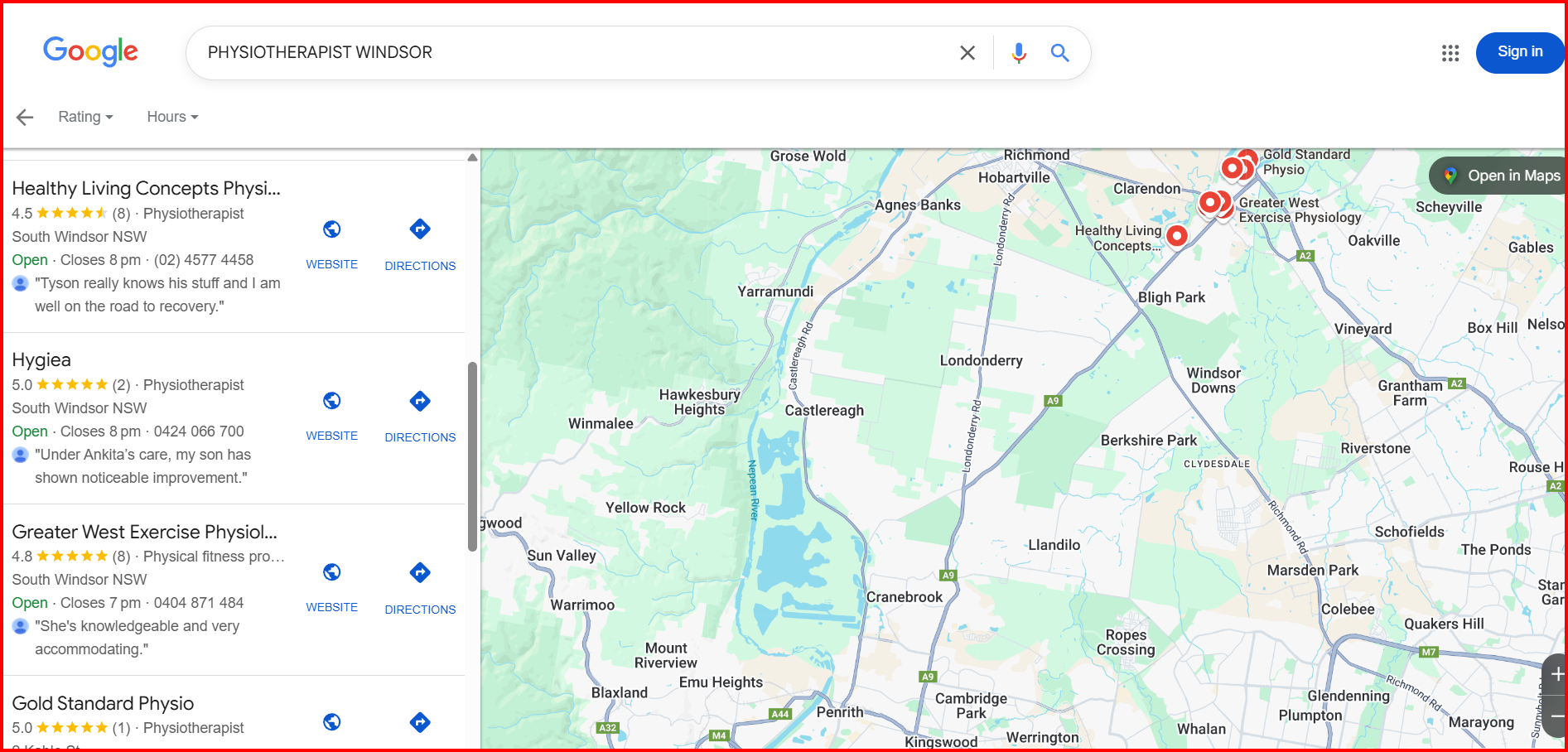
Appears in Google Maps when people search for services nearby.
Displays key business info like hours, contact details, and services.
Collects and showcases client reviews (which improve credibility).
Tip: If you’re not ranking in local searches, your GBP likely needs work.
6. Paid advertising (Google & social media ads)
This service is coming soon.
While organic marketing is crucial, paid advertising helps accelerate growth. Allied health businesses can benefit from:
Google Ads targeting people searching for specific services.
Facebook, Instagram or LinkedIn ads designed to attract the right audience.
Retargeting ads to reach people who’ve previously visited your website.
Tip: A marketing expert can help set up and manage ads for the best return on investment.
The power of outsourcing: Work smarter, not harder
As an Allied health business owner, your expertise is in patient care—not in marketing algorithms, SEO, or content strategies. By outsourcing your marketing to professionals who understand both the industry and the latest trends, your free up time to focus on your clients while ensuring steady business growth, by boosting client satisfaction.
At Versatile Marketing, we specialise in helping Allied Health and Wellness businesses gain visibility, attract their ideal clients, and stay compliant with AHPRA regulations. Whether you need a complete marketing overhaul or just some strategic support, we’re here to help.
Ready to grow your practice without the marketing headache?
At Versatile Marketing, we provide professional outsourced marketing support for small businesses just like yours. If you’d like to find out more, visit our website or book in a complimentary discovery call. Don’t forget to download your FREE copy of our seasonal, printable content planning calendar. Just sign-up in the form at the bottom of this page.
1. Setting your vision and strategies to get things done
As a small business owner, having a clear vision of where you want to go is so powerful! It sets the scene for all that’s to come. To grow your business, you need to transform your vision into a plan.
When you execute your vision and plan, share it across your digital marketing platforms. By doing this, you create an amazing opportunity for your audience to connect. When engagement occurs, visibility and growth are inevitable.
Invest in these 4 simple business strategies, so you can reap the benefits for this year and beyond.
1. Reflection and vision
The best place to start, when you want to move forward and grow, is to understand where you have been. Ask yourself: What worked well last year? Why did it succeed? Are any tweaks required to remain current and relevant moving forward?
2. What didn’t work?
Assess how and why it didn’t work. Is it still aligned with your vision? Perhaps it requires a new approach or discarding?
3. Were strategies set for the last year which you were unable to meet for whatever reason?
If they’re still relevant and current, plan them into your strategy for this year and beyond where necessary.
4. When did you last review your business plan?
Remember that thing you wrote (with hope) when you first started your business? With the day-to-day running of your business, has it been neglected?
I recently reviewed mine, written in 2018. My business has consciously changed course somewhat. And it drifted a couple of degrees off course all by itself. It’s important to re-chart the course to its new desired destination.
Review and assess your:
Mission and vision and values
Ideal clients and their needs
Branding, has it changed?
SWAT and risks? Ask yourself is it still current and accurate? If not revise it with the next 2-5 years in mind, not only the next year! Time flies, so it’s advisable for your business strategy to have short and long-range plans and milestones.
The best way to ensure you reach your business goal is to go through an important annual planning process. Assess lessons learned and changes in circumstances, like:
New technology
Digital marketing and communication platform changes
Turnover
New products or services
Market changes
Environmental changes and impacts.
These all may lead to re-assessing your long-range plan.
Take the time annually, to measure your progress. Assess what you need to do in the coming year to remain relevant and on track. So set a date now in your calendar towards the end of the year, or end of the financial year, to take stock and assess.
2. Plan ahead
You might be familiar with this Benjamin Franklin quote:
If you fail to plan, you are planning to fail!
After all of the reflecting, re-assessing and re-aligning. The next step is to create a realistic and achievable plan. There are so many ways to plan. And an abundance of approaches and tools to assist you to stay focused and on track.
Here are some suggestions:
Annual planning
Set yourself an annual Big Hairy Audacious Goal (BHAG), (taken from Jim Collin’s book ‘Built to last’)
What strengths do you need to achieve this BHAG? List 3-5 key strengths.
What are your annual priorities?
List 3-5 priorities you will focus on this year to either leverage your current strengths and activities. Or develop new ones that align with and lead you towards your BHAG.
Quarterly planning
Break down each of the above priorities into quarterly SMART objectives (specific, measurable, achievable, relevant & time-bound). Plan your digital marketing content quarterly. To assist you here is a free seasonal content planner to help you do just this. Maintain clarity around your overarching vision. Be conscious of your business plan and break down the quarterly plan for each area of your business.
Think: sales, marketing, networking, financial, systems integrations,and the actual implementation of efficient work practices.
It’s important to keep current with the latest technology, algorithms and systems. Remember that change is the only constant.
Using your seasonal content planner. Once your annual and quarterly themes are in place. Break it down to monthly, weekly and daily.
3. Be visible in a digital world
Digital platforms are the way of the future. But what does this mean for your company? Sure, more and more business is performed digitally annually.
To be visible in your business, you need to have a consistent presence, spanning over numerous platforms.
People need to know about your brand, your product or service and your unique value proposition so they can choose to buy from you.
There are many other reasons to be visible.
The more your prospective customers see, hear, and read about you in various places. For example, web sites, Facebook posts, LinkedIn articles, podcasts, blog posts, etc. The more you’ll be seen as a subject matter expert.
When you become more visible, potential clients or customers become curious and are likely to visit your website to find out more. If you have a well-placed opt-in, you’re likely to increase the visibility further, once they sign up to your list. Then you can stay in touch via newsletters and emails. Visibility allows you to stay in front of mind. When your customers ready to purchase the odds will be in your favour.
Be genuinely you! If you’re an entrepreneur or small business owner, become the face of your business and allow people to get to know you. This might be via YouTube videos, Facebook lives, or simply posts on social media, but don’t forget the ‘YOU’ in your business.
As you can see, there’s a strong argument for why visibility is a vital component in your marketing strategy. Choose the activities you wish to do on a regular basis. Work out where your customers are and select one or two platforms and share content consistently. Only once they’re embedded, add more. These might include:
Article marketing
Social media (Facebook, WeChat, LinkedIn, Twitter, Instagram, Google My Business etc.)
Blogging & guest blogging
Guest podcasts or run your own podcast
Webinars
E-books
Online courses
Attending events
Newsletters
Vlogs
This list could go on. Remember to re-purpose and cross-promote. With content marketing, allocate enough time to plan and implement a consistent strategy. It can be quite time-consuming but there are tools and systems available to assist.
Owning your own business has numerous perks, you can do what you love, with flexibility. You can be a decision-maker and see the tangible difference you make to your clients or customers, delivering your service or product. Following your passions can only ever be brilliant, right? Well… yes, so long as you get the right balance.
On the flip side, there are numerous stressors. As a business owner, the buck stops with you. You’re likely wearing multiple hats while putting in long hours, many unpaid. There is the worry of cashflow or feeling isolated or the uncertainty of which step to take next. There simply is never enough time to do it all.
Take YOU time
It’s important to acknowledge when you need a day off, to be proactive about your mental and physical health. Maybe it’s a quick yoga session, a night out, a cup of tea or a trip to the beach. Whatever it is, find something that recharges your batteries.
What is your time worth?
Another way to value ‘you time’ is to recognise how much you charge per hour. Let’s assume you earn $150 p/hr. If you’re spending time on recurring work, which isn’t essential for you to do, then consider outsourcing it to someone who earns less than your hourly rate. In this scenario, $50 or $140 p/hour is still a brilliant investment. If you utilise this additional time on your core business activities and relationship building, your business is sure to grow. So remember to value your time, it’s a smart business strategy. Do you know over 1/3 of small business outsource a portion of their work, and that statistic is growing!
Work time is valuable, but so is your downtime because the productivity of your work time is directly correlated to how much downtime you get and how much sleep you have. So remember to practice self-care.
Another clever way to take time for you is… when you plan your year, plan a holiday or two each year. Get it in the calendar, it gives you something to work towards and plan around.
By following these simple four steps, you’re set for a well-planned, visible year. With a crystal-clear vision of where you are and where you want to be. You can take valuable ‘you time’, outsource where needed, and watch your business grow.
Need help with your digital marketing?
At Versatile Marketing, we provide professional outsourced marketing support for small businesses just like yours. If you’d like to find out more, visit our website or book in a complimentary discovery call. Don’t forget to download your FREE copy of our seasonal, printable content calendar. Just sign-up at the bottom of this page.
5 tips to help your business systemise and outsource
So you’ve decided it’s time to outsource your time-consuming business tasks and those projects as Marie Condo would say, that don’t ‘spark joy’.
You’re not alone, in Australia, numerous businesses are seeing the value in outsourcing significant parts of their work to online business services/outsourcing partners, as it brings in expertise from outside the business to assist with a specific project or manage a specific function, when required.
Outsourcing is an effective business strategy used by companies in all industries to run a cost effective and efficient business and is instrumental in business growth. However, for it to be effective, it’s important to do the groundwork first.
Here are 5 tips to help your business systemise and outsource like a pro.
1. Determine the tasks that you want to outsource
As a small business owner, you’re likely to be wearing many hats, to drive growth in your business, its vital you assess which tasks are not core to your business function, and systemise where possible and outsource the remainder. The first step is to record all the tasks which are NOT core to your business function.
You then need to assess which of these tasks take the most time to complete? Remember your time is money. The person you are hiring will, in most cases cost less per hour than you charge. By delegating the time-consuming tasks, you have allowed yourself the room to focus on your big picture business growth.
Next, write down at any tasks you don’t enjoy doing. If any tasks give you a sense of overwhelm or frustration, they should be outsourced, leaving you space to be a happier, healthier and more focused CEO.
Lastly, maybe there are tasks, which you actually enjoy doing and its not overly time-consuming, it may even be central to your business function, but you are now getting so busy you need an extra pair of hands now and then to help you out. Maybe you’re going away on holidays and need someone to hold down the fort? Sign up for our free template to help document your tasks.
2. Systemise your tasks
Before you outsource, assess if any tasks can be systemised. For example, if you are taking all the phone calls from prospect clients, diarising initial meetings and sending meeting invitations, consider using a booking system instead, e.g Calendly or Acuity. This allows your customers to book a meeting time which works best for them, (you’ve already set your available time), it will automatically place the booking into your calendar for you both, and can integrate with an online meeting tool like Skype or Zoom.
If you are emailing the same response to multiple customers, then set it up as an automated template. This can even be done using Gmail with canned responses. Use the systems you’re currently using and enhance them to work for you.
3. Document your processes
Once you’ve recorded all business tasks on a spreadsheet, document processes for all the tasks you intend to outsource. An easy way to do this to log in to Zoom and record yourself actually doing the task, it will record your voice your computer screen, then save it to a folder with a clear naming convention e.g.: ‘Business name_taskname_processes_year’.
To set up your outsourced project for success, always start with a clear statement of the outcome you want to achieve. Define your requirements clearly. Your outsource partner will need accurate complete information to provide a quality proposal covering requirements, time frame and cost.
Information to provide:
What is the process for the task (as above)?
What is the deadline or the priority for this task?
What documents, contacts, logins or other resources are needed to do the task?
Are there any risks or dependencies that may hold up task completion?
By relaying as much relevant and concise information as possible to your virtual assistant, you will increase clarity and accuracy and reduce overwhelm.
5. Build the trust – Start outsourcing with small tasks
In order to grow your business, outsourcing is essential. However, as a small business owner, you have a vested interest to provide the BEST service possible to your customers, so it can be daunting to trust someone to take on your work.
If you really want to grow as an entrepreneur, you’ve got to learn to delegate.
Richard Branson.
Outsourcing work to your marketing or virtual assistant involves trust they hold the same service and ethical values as you do. Using an outsourcing partner from your own country and background, with English as a first language and where you can validate references, or certifications with ease can help mitigate some of these concerns.
Consider doing a trial run with smaller tasks, before you make a long-term commitment. You will be able to ascertain if your outsource partner’s capabilities, communication and ethics are matched to your expectations and vice versa. Be prepared to put in time and effort to train and explain at the beginning, you won’t immediately have extra time but it won’t be too long before you will soon be reaping the benefits.
Open communication is key and as your business relationship evolves, provide feedback and solicit feedback from your outsource partner. Keeping an open line of communication is vital to ensure everyone is on the same page and expectations are being met on both sides.
Oursource your digital marketing tasks to Versatile Marketing
At Versatile Marketing, you can access customer centric, experienced marketing assistants and online business managers any time you need it, without the costs of having an employee. By staying focused on your core business function and outsourcing the rest, you can free up your time to get the balance back and scale your business.


 The five biggest privacy pitfalls (and how to avoid them)