The challenges of running an Allied Health practice
Running an allied health or wellness practice is a labour of love. You’re passionate about helping your clients achieve better health outcomes, whether through Physiotherapy, Psychology, Osteopathy, Chiropractic care, and so on. But with so much focus on client care, the business side of things—especially marketing—often takes a backseat.
Many practice owners find themselves wearing too many hats. One minute you’re treating a client, the next you’re answering emails, and then trying to squeeze in time to post on social media or update your website. Marketing for allied health practices isn’t straight forward, an omni-channel approach is necessary. Marketing isn’t just an add-on; it’s a crucial part of growing and sustaining your practice. And this is where professional marketing support can make all the difference.
The reality of DIY marketing: Is it holding you back?
Marketing isn’t as simple as posting the occasional update on Instagram. Marketing for Allied health practices in Australia requires a tailored approach. The market competition is the highest its ever been, with Allied Health Professionals having the highest comparative industry growth in the health sector, of 67%. (AIHW Australia’s health 2024)
Allied Health marketing is not like other marketing, you need to consider the unique offerings of your brand, your ideal audiences wants and needs, the marketing landscape, the healthcare sector, compliance and what makes your practice unique. Here are some common struggles faced by allied health and wellness practices trying to manage their own marketing:
Time Constraints – With client appointments, admin, recruitment and professional development, marketing often gets pushed to the bottom of the to-do list.
Lack of Strategy – Posting randomly on social media or running a Google ad without a clear strategy can lead to wasted effort and money.
AHPRA Compliance – The Australian Health Practitioner Regulation Agency (AHPRA) has strict guidelines around advertising health services. Many practitioners unknowingly breach these rules, leading to potential fines.
Inconsistent Branding – Without a clear brand message and visual identity, your practice can struggle to stand out and attract the right clients.
SEO Confusion – Search engine optimisation (SEO) is crucial for helping potential clients find your services online, but it requires expertise to get it right.
Keeping up with the ever evolving landscape – AI and Automation is starting to be used not only in marketing but diagnosis and treatment too..
How professional marketing support can help
78% of Australian adults use the internet to find health-related information.Investing in marketing support tailored to allied health and wellness businesses can:
Increase visibility – More people searching for your services will find you.
Build trust and authority – Consistent, high-quality content and branding helps establish credibility and trust.
Relationship building and referral partnerships – Helping build trust in vital integrated care model relationships. This creates a steady flow of referrals in and out of the practice. Building solid relationships with a multi-disciplinary team is an essential component of allied health marketing. When allied health professionals work side-by-side with GPs and other allied health or specialist providers, there is a seamless flow of information and expertise that benefits the patient.
Save you time and energy – Focus on client care while experts handle the marketing.
Ensure AHPRA compliance – Avoid advertising pitfalls, potential huge fines and maintain ethical standards.
How Versatile Marketing helps Allied Health and Wellness practices with professional marketing support
1. Strategy, planning and training
Running inhouse and online workshops and training sessions to teach DIY
Creating a SMART marketing strategy, which will be incorporated into your practice processes and your outsourcing methods. This will look at things like: tone of voice, online communication methods, the holistic marketing approach e.g. referral partner strategy, networking and partnerships, website maintenance, blogging, statistical analysis and review meetings, competition, unique value propositions, frequency, ideal audience analysis, and how you will exhibit effective communication of your brand through consistent clear, empathetic plain English, and compliance with AHPRA guidelines.
Quarterly content planning sessions
2. SEO and website optimisation
Your website is your digital front door. If it’s not optimised for SEO, potential clients won’t find you. An SEO-optimised website:
Uses the right keywords (e.g., “physiotherapist Sydney” or “psychologist for anxiety Brisbane”). Ensure images are well labelled and sized, ensure your website is technically optimised to rank higher in search engine results.
Loads quickly and is mobile-friendly and user-friendly.
Has clear and non-guilt driven calls-to-action (CTAs) like “Book an Appointment.” and not “don’t miss out”, Followed by an easy to use booking system.
Content to be informative, including details like contact information, availability, your team, services, your WHY (about), and additional educational type content like FAQs, blogs, videos, infographics, downloadable resources, these are an essential ingredient to build rapport and trust. Topics might cover common health concerns, modalities that your team are trained in, the process to book a particular service, or the benefits of seeking support (using evidence-based findings).
Tip: A professional marketing team can audit your website and implement the necessary SEO strategies to boost traffic.
3. Social media management
Social media is a powerful tool for educating, engaging, and attracting clients. However, it requires consistency and strategy.
Content should educate, inspire, and build trust.
Platforms like Instagram, Facebook, and LinkedIn work best for different types of content.
Engagement matters—responding to comments and messages builds relationships.
Tip: A social media manager ensures your posts are on-brand, consistently posted, compliant, and reaching the right audience, focusing on the platform they most visit.
4. Content marketing: Blogging, emails & more
Regular content—whether in the form of blogs, emails, or videos—helps establish you as a trusted expert.
Blogging improves SEO and answers common client questions.
Email marketing keeps current and potential clients engaged and referral partners informed.
Tip: A marketing team can plan, write, and distribute your content to maximise engagement.
5. Google Business Profile optimisation
Google Business Profile (GBP) is essential for local search visibility. An optimised profile:
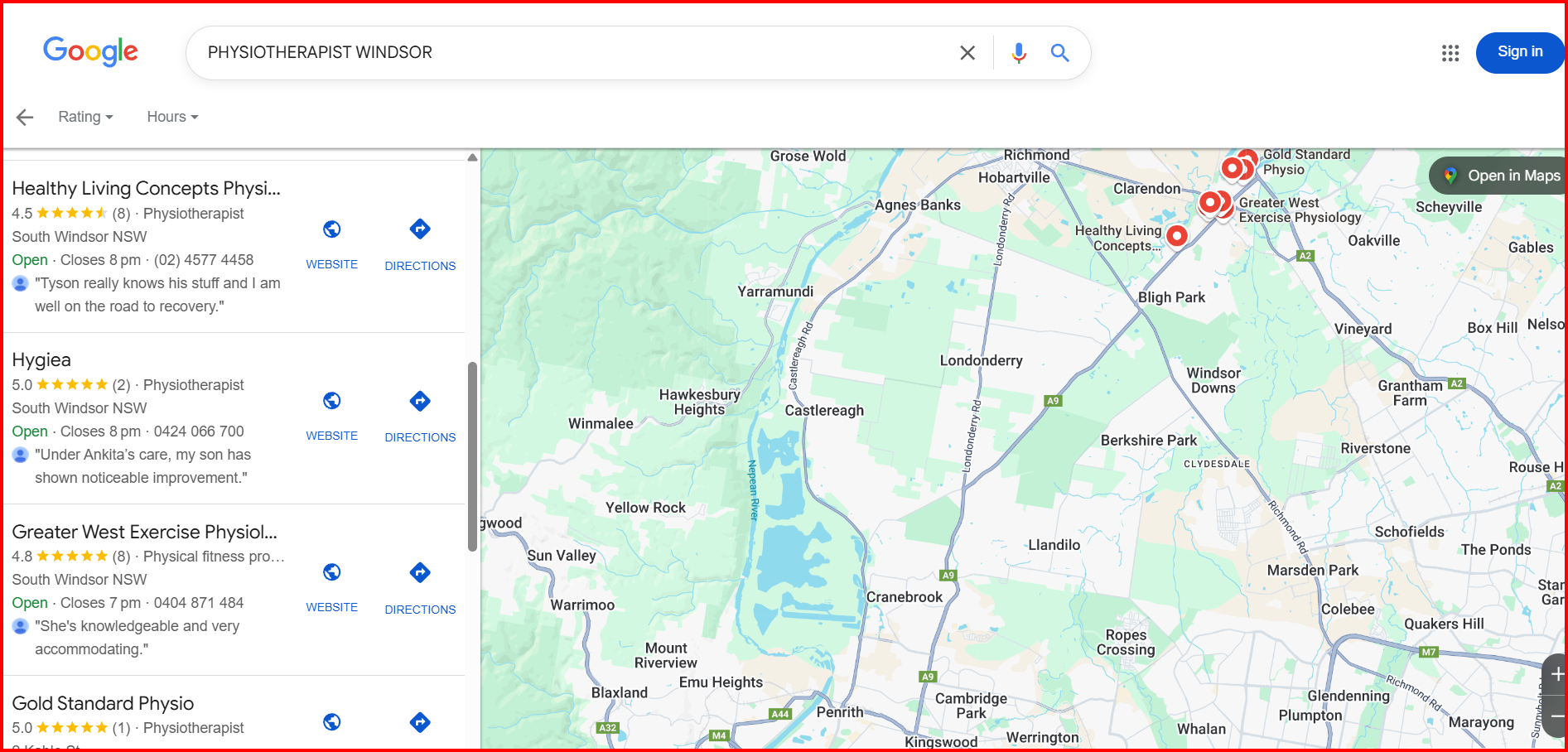
Appears in Google Maps when people search for services nearby.
Displays key business info like hours, contact details, and services.
Collects and showcases client reviews (which improve credibility).
Tip: If you’re not ranking in local searches, your GBP likely needs work.
6. Paid advertising (Google & social media ads)
This service is coming soon.
While organic marketing is crucial, paid advertising helps accelerate growth. Allied health businesses can benefit from:
Google Ads targeting people searching for specific services.
Facebook, Instagram or LinkedIn ads designed to attract the right audience.
Retargeting ads to reach people who’ve previously visited your website.
Tip: A marketing expert can help set up and manage ads for the best return on investment.
The power of outsourcing: Work smarter, not harder
As an Allied health business owner, your expertise is in patient care—not in marketing algorithms, SEO, or content strategies. By outsourcing your marketing to professionals who understand both the industry and the latest trends, your free up time to focus on your clients while ensuring steady business growth, by boosting client satisfaction.
At Versatile Marketing, we specialise in helping Allied Health and Wellness businesses gain visibility, attract their ideal clients, and stay compliant with AHPRA regulations. Whether you need a complete marketing overhaul or just some strategic support, we’re here to help.
Ready to grow your practice without the marketing headache?
At Versatile Marketing, we provide professional outsourced marketing support for small businesses just like yours. If you’d like to find out more, visit our website or book in a complimentary discovery call. Don’t forget to download your FREE copy of our seasonal, printable content planning calendar. Just sign-up in the form at the bottom of this page.
Why Google Business Profile is a smart move for health and wellness businesses
In today’s digital age, a strong online presence is essential. For Allied Health and Wellness practices in Australia, standing out in a crowded local market can be challenging. This is where Google Business Profile (GBP) comes in. Properly optimised, GBP can boost your local visibility and attract local ideal customers, making it easier for potential clients to find your practice when they need it most.
This blog is relevant to all Allied Health practices: whether you’re a physiotherapist in Perth, an Osteopath in Sydney, a Kinesiologist in Canberra, or a Dentist in Cairns, GBP is a smart marketing move.
When potential clients search for health services like yours, Google Business Profile increases your chances of appearing in local search results. Optimising your GBP with accurate service details, reviews, offers and photos positions you as a trusted and accessible provider in your area. This leads to higher visibility and engagement with the right clients at the right time.
How does my ideal client find my clinic?
Consider how your ideal clients typically find out about your practice.
The four common marketing avenues are:
Digital Search – This includes Google, social media, directories, and email marketing.
Referrals – A vital strategy, but we’ll discuss this more in a future blog.
Physical Signage & Print Media – Brochures and handouts still have value.
Public Speaking – Speaking engagements at schools, conferences, or networking events.
Today, we focus on one aspect of digital search, and perhaps one, if not the most prominent way local customers will find you and your practice! Google Search, and more specifically your Google Business Profile, plays a significant role in helping clients find your clinic through local search.
According to Stat Counter, as of July 2024 Google remains the leading search engine in terms of market share in Australia at 93.95%. Bing follows second at a measly 4.48%.
How to get found on Google
For local clients to find you, focus on these two key digital assets:
An AHPRA-compliant, search engine optimised (SEO) website.
An active, well-optimised Google Business Profile (Local SEO).
Of course, there are other factors for local and general optimisation, like social media, directories, podcasts and basically all other ways you’re connected online. Simply said, the more online presence you have, the easier it is for people to find you. Therefore, hopefully they will also begin to know, like and trust your brand.
Why is it so important to have a digital presence?
According to RedSeach, “Aussies spend 6.8 hours EVERY DAY searching the web”. They use it to shop, research, and look for which provider suits their health concern, and also to locate specific service providers in their local area to help with various physical and mental health concerns. So, if you don’t have a website or GBP… you’re missing a HUGE market of potential clients.
Still not convinced your Aussie Allied Health or wellness business needs a fully optimised GBP listing to attract local ideal customers? No worries…grab a cuppa, and read on, as I share why it’s fab for your practice.
Your Google Business Profile isn’t just a listing—it’s a gateway for Allied Health and wellness businesses to connect with local clients, build trust, and drive meaningful growth. In today’s digital world, visibility starts here. Deborah Ricketts
Why should your practice be on Google Business Profile?
Well, for starters, in this financial climate, we’re all looking for the best return for least investment, and GBP has you covered here – it’s free! And you will have a distinct advantage over more than half of the business population, as 55% of Australian local businesses haven’t claimed their GBP listing. I know right!?
1. Enhanced online visibility
Google Business Profile allows clients to find your practice based on location via Google Maps. It shows essential details like phone number, address, and reviews, making it easier for clients to connect with you.
2. Improved local SEO
Optimising your GBP improves your local SEO, boosting your chances of appearing in search results when potential patients search for relevant services in your area. It looks at factors like relevance (to the search query), distance from the searchers location, and prominence, which is basically how well you’re known online, liked and trusted, which can be determined by scanning the quality and quantity of reviews, content, connections, directory listings, well optimised websites, podcasts, books, webinars etc…
3. Credibility through reviews
GBP allows patients to leave reviews and ratings. Client reviews provide social proof, building trust and credibility. Google favours businesses with positive reviews, which can also influence new clients’ decisions. Managing your reviews effectively can provide great opportunities for social proof. Encourage your clients to leave a review by copying the review link and sharing it via an email or place it on your invoice. It not only boosts your authority but also improves your ranking in local search results.
And yes, let’s talk about the elephant in the room. AHPRA compliance in relation to testimonials. As this is a big and relevant topic for all allied health professionals, and to give it the airtime it so rightly deserves. Testimonials and Google Reviews complying with the Australian Health Practitioner Regulation Agency will be addressed in its own dedicated blog. This will give you the know-how to confidently use the platform without breaching regulations. Because no one wants that!
Fun fact you may not know … Google Maps is the preferred navigation app for 67% of customers. So not only is Google Search the most popular form of search, but Google Maps is the most popular navigation app. See why you need to be on this platform?
Is it worth the time to keep my profile updated?
Absolutely! Google rewards active profiles. Regular updates, such as adding new services, sharing posts, responding to reviews (where appropriate), and a keyword rich description, signal to Google that your practice is active and engaged. This improves your rankings. Active management of your GBP is a powerful way to stay ahead of competitors who may not be doing the same. And because I love providing you value… here are some post and photo ideas for your profile:
What does keyword rich mean?
A keyword is a word or phrase that people use when searching for something online. For example, if someone is looking for a physiotherapist, they might type “physiotherapist near me” into Google. “Physiotherapist” is the keyword in this case. Keywords help search engines understand what your content is about and show it to the right audience. Using the right keywords in your website, blog, or ad helps people find you, as they’re looking for services like yours.
Here are some popular sites to help you obtain keywords for SEO:
Google Keyword Planner (it’s free – It’s connected to Google Ads, but don’t worry, you don’t need to proceed with the Google Ad Campaign) It’s best for researching paid keywords and understanding search volume.
Moz Keyword Explorer A great all-around free (try for free for 30 days) tool for keyword research, offering insights on keyword difficulty and SERP (search engine results page) analysis
Semrush A comprehensive tool for keyword research, competitor analysis, and tracking rankings
When you’re typing a query in Google, you may type “experienced Chiropractor in Balmain”, but when using a voice search, you are likely to use more of a conversational tone – “Hey Google, who is the most experienced Chiro near me, for back pain?” This example demonstrates the use of slang ‘Chiro’, when spoken, and terms like ‘near me’ and ‘back pain’, that weren’t in the typed search example.
So, when optimising your GBP, use your questions and answers section, and do it wisely. Consider the most frequently asked questions your clients ask you. Then consider how they may ask (or better yet, research it, by asking your ideal and existing clients questions). What language do they use? Take note of key questions you receive about your services, this is valuable information.
Hot Tip: You can add your own questions to the questions and answers section on GBP. You don’t need to wait for a member of the public to ask. You can, and should also, answer all questions (with plain language and keywords).
What if my clinic already gets referrals—do I still need Google Business Profile?
Referrals are crucial, but consider GBP an additional touch point where potential clients verify your reputation. Even those referred to your practice are likely to search for your clinic online, so an optimised GBP reassures them with positive reviews, location accuracy, and updated service offerings. There are changes to the platform all the time, with new features and removed features. For example, if you had a website using this platform, it no longer exists, messaging also gone or going depending on where you’re located.
Can Google Business Profile help increase client bookings?
Yes! An optimised profile allows clients to directly book appointments, call, or visit your website from your listing. With features like the “Book Now” button or integration with scheduling platforms, it simplifies the booking process, reducing friction and turning searchers into clients faster. You can post special offers and events here too!
Organic click-through rate is 39.8% in 2024, and paid searches decreased to 1.6 for the first paid position. If you’re wondering what these stats suggest, I’ll help you out… basically using keywords and SEO methods, rather than paying per click, is a long-game play which WILL pay off! So, my allied health and wellness founder friends, Google Business Profile is something you should add to your marketing efforts.
Why partner with Versatile Marketing?
Optimising and managing your Google Business Profile may seem overwhelming, but that’s where we come in. At Versatile Marketing, we specialise in marketing for Allied Health professionals, including AHPRA compliant social media management and GBP optimisation, ensuring your practice gets noticed by the right clients.
Don’t miss new opportunities. Let us help you enhance your online presence. Book a free discovery consultation with Deb today. Support Leads to Success.
Harnessing the positive impacts of community for VAs, freelancers and business owners: Because together, we’re virtually unstoppable!
The Sydney Virtual Assistant Community (SVAC) was founded in 2019 by Amanda Primrose and myself, Deb Ricketts, to create a space where Sydney based virtual business owners could meet online and in person, socialise, learn, share, collaborate, support, and engage with other virtual assistants and freelancers in Sydney, Australia.
What inspired Amanda and Deb to start a VA community in Sydney?
It all started here… I began my VA journey as Amanda’s subcontractor. Prior to this, I had come from the corporate world and didn’t know what a VA was myself. Neither Amanda nor myself knew other Virtual Assistants locally, although we both received feedback from prospects and clients about some Sydney based VA cowgirls and offshore VAs, creating a not so wonderful reputation for the industry.
While we were aware of other groups in Australia and globally, there didn’t appear to be anything for Sydney based VAs. There also didn’t appear to be any association holding the industry to a standard. (We are now well aware that there is actually an association – shout out to the AAVIP).
Seizing the opportunity to give back to our community, we created a space specifically for Sydney VAs to find each other, learn, connect, collaborate, and hold each other accountable to a high standard of professionalism. We figured if we strengthened the reputation of the industry in our local communities and nationally, we were part of the solution. A win-win for businesses, as well as professional and ethical virtual assistants. So that is how this amazing community of incredible virtual assistants was born.
At the heart of the Sydney VA Community are various key activities carefully curated to foster connection, growth, and learning. Over the years, we have continuously sought to create meaningful experiences for our members, both in-person and online.
In person events
One of our core offerings is our celebratory events. These in-person gatherings provide a space for members to come together and recognise their achievements, milestones, and successes. It’s a time for us to celebrate each other’s accomplishments and build a sense of camaraderie within the community.
In person and virtual co-working
In addition to celebratory events, we also provide co-working opportunities. We understand that working as a virtual assistant can sometimes feel isolating, which is why we offer dedicated spaces where members can come together and work side by side. This not only creates a supportive environment, but also allows collaboration and knowledge sharing among peers.
Harnessing continuous learning opportunities
Furthermore, our online laugh and learn sessions are designed to educate our members on specific business topics relevant to their passions and purpose. We bring in experts from both within our community and external businesses to share their insights and expertise. These sessions serve as valuable learning opportunities that empower our members with new skills and knowledge.
The key activities offered by the Sydney VA Community include celebration, collaboration, education, and personal growth. We believe in creating an inclusive environment where virtual assistants can thrive both personally and professionally.
In 2022, Amanda stepped down from the leadership position, and remains an active and valued member within the group.
You guys are my go to whenever I have a question about a particular piece of software or tech. There have been countless times someone in SVAC has helped me fix something or a workshop so that I can bring better service to my clients. I have also loved giving back to those that are new VA’s. It has brought me so much joy to mentor newbies and then see them grow and flourish. #vafamily.
The group has organically grown from under 10 members in 2019 to over 160 Sydney (and surrounds) based VAs to date. It’s incredible to watch over the last few years how our industry is growing, as is the diversity of the members’ services.
With the growth of the industry (especially post COVID), coupled with Versatile Marketing’s business growth, and let’s not forget my personal workload (Mum of 2 girls, a guinea pig, puppy, other voluntary commitments and the list goes on). I recognised that I couldn’t bring about the best opportunities for the members solo. So, in March 2023, active community members with aligned passion, professionalism and ethics submitted an expression of interest to co-lead the group and become the current 2023 SVAC support partners.
What makes the Sydney VA community unique?
We do things here a little differently, all leaders volunteer their precious time to make a positive difference. Members’ contributions also add incredible value to the group. We are founded on support, respect, trust, and good manners. This is a community environment where you can join knowing you have a supportive business community to cheer you on and help you grow.
While this is far from an exhaustive list, members have been known to voluntarily support other businesses with:
branding
website support
Excel spreadsheet challenges
insurance recommendations
nominations for business awards
active listening when a vent is needed or concerns raised.
listed sub-contract opportunities
business collaborations
co-working opportunities
shared learning at each others houses
a drink at the local bar or cafe
we’ve had more experienced VAs offer to mentor newer VAs to the industry
referrals
guidance.
We asked our members to share their experiences in the community. Here are a few:
One thing I love about the SVAC group, it doesn’t matter how silly I think a question is, everyone is supportive. There is always someone willing to provide advice or assistance when I need it, or people who have checked in with me when I have been struggling. Being part of this group over the past few years has been invaluable. Working on your own, while it’s great, can be lonely. I don’t usually attend a lot of networking events, but love it when I can catch up with the SVAC group either in person or online. It’s so nice to talk to other VAs about our businesses, the juggle with families, etc… which makes working from home that little bit less lonely.
SVAC helped me at the start of my VA journey, when I was feeling lost. Through this group I have connected with and met some of the most amazing women. I love that we understand each other’s journey, and we are there to pick each other up and assist each other in our areas of expertise. It’s such a great group to be part of, and I am honoured to be here.
Working in isolation and small business ownership are two large contributors to mental ill-health. As such, I am passionate to provide a holistic approach, providing the community with mindset, mental health, and other personal growth strategies, as well as the more expected business topics. The group provides a safe space for all members to share openly about their successes and challenges.
We encourage our members to ask questions, share wins, tips, share other respected VA community group activities, to ensure we are all connected as an industry.
Connection with the broader Aussie VA industry leaders
We embrace being part of the larger Australian VA community, and will continue to collaborate, partner with and be affiliates for many industry leaders. Sydney VA Community members are also members in various other industry groups and participated in the
We are currently promoting Kate Toon’s Marketing Conference, which allows members to attend at a discounted rate. *Squeal* She is a mentor of mine (even if she doesn’t know it).
Any affiliate tickets purchased through the group contribute towards the community’s activities. A win/win for all involved.
Connection with our local Sydney business community
Local Sydney community leaders have sponsored our events, provided prizes for awards, and promo and gift items for goody bags at events, and shared their knowledge in laugh and learn sessions.
We welcome expressions of interest for guest speakers to present to the group, sponsorships, grants, affiliates, co-working spaces or any other support you could provide to support 160+ small business owners working remotely and needing community connection.
Introducing the gorgeous SVAC 2023 partners
Beth Newman
This group has helped me with information and tips for my business, but has also provided the friendship and support you miss from solo remote working. There is still somewhere to go to ask a question or run something by, or simply a lift when you feel deflated or defeated. I love the opportunities it brings if you simply give things a go when offered.
I felt supported, particularly through the early stages of my business I always enjoyed the lunch and learn events. They are good to connect and to learn something, as the name suggests.
Christine shares the value and benefits she found from the group, which was
Growth and confidence. I was so new at all of this when I first engaged with SVAC group, and I really do feel like a completely different person almost four years later. Now I get to be that support to other people, and it still enriches me. My favourite activities have been the Christmas gatherings. They’ve all been held at different locations and there are always new faces, and of course older faces like me. It offers such a relaxed time together and there is so much laughter, especially around the Kris Kringle gifts.
I really enjoy meeting all the incredible people in the SVAC group and learning about their stories. Their reasons for becoming a VA, how they got there and started, what keeps them going. I really love being part of a community where I can help and support people on their journey in the VA world. I too always really enjoy the Christmas parties at the end of the year, it’s a great time to get together, relax and laugh. Great games and fun.”
SVAC provides professional support, but more than that, I find the group helps decrease the isolation we VAs are prone to as self-employed freelancers who work from home and for whom most professional contact is via phone, zoom or email. I think we sometimes get too tied up with responsibilities and unplanned life stuff that happens to take time to smell the roses. SVAC’s approach is unique in that it is NFP, led by volunteers, and focused on professional AND personal well-being as well as connecting VAs across wider Sydney and their local communities.
If you’re a business owner who wants to collaborate, provide a complimentary laugh and learn session, sponsor an event, provide co-working space provisions or support the Sydney Virtual Assistant Community, your contribution will help maintain a space to call home for women (and currently one man, Chiya Clayton), feel connected, inspired, motivated, learn new skills, feel nurtured, and most importantly build lifelong relationships like you would in a corporate setting.
The best part is it’s mutually beneficial, as we can introduce you to over 160 small business owners who may utilise your products or services.
Do you want to get your business out of your head?
Regardless of the size of your business, standard operating procedures are an essential ingredient for successful outcomes. SOPs make running a business simpler for all involved, from contractors and staff to directors and government bodies, and most importantly clients/customers. They assist with providing quality, productive, consistent outcomes, efficient work practices, and training materials or friendly reminders to the small business owner juggling multiple tasks. They are a key ingredient to help scale your business.
So let’s look deeper into the what, when and why when it comes to creating SOPs.
What are Standard Operating Procedures (SOP)?
I mentioned that every business needs an SOP. And yes, it’s true. But what exactly is an SOP and why do you need one? An SOP is essentially a step-by-step guide for executing recurring tasks in your business.
It specifies when, how and why you do a particular function in your business. E.g how to perform a particular process, or how a system is to be used.
Examples of Standard Operating Procedures
For a small business SOPs might cover areas like:
New customer/client onboarding: This will show the steps you take to bring on board a new customer/client.
Updating your website: Branding guidelines, steps for uploading information, links, videos and photos, programs integrations, updates, changes to company policy or public notices to customers/clients, compliance updates etc.
Sales calls: a guide to handling the tricky sales calls
Invoicing and bookkeeping: steps from sending an invoice and the variables in pricing, to receipting payments, entering customers into the financial management system, reconciling accounts, and running reports.
Blog management: Instructions on how or where to draft the post, searching for keywords, posting on your website, style and format of posting, frequency and time of posting, how to promote new blog posts
Once you have a collection of procedures for different business activities, you could compile them into a user manual for yourself or any contractor or employee you bring into the business to handle specific business functions.
7 Benefits of Standard Operating Procedures
As a small business, following standardised operating procedures can save you time and allow you (and your team) to be more productive. They reduce errors, and improve compliance with industry guidelines. Here are 7 reasons why every small business should have SOPs:
1. Setting standards and structure within your business
A successful business can act quickly on leads and opportunities, this can be done effectively if the relevant operational information is easily locatable, relatable and transferable.
2. Reducing error rate
Having a documented procedure provides a brilliant level of quality control. There is no ambiguity or creative divergence, a simple and concise process to follow. Train new employees or Virtual Assistants and other contractors knowing that a consistent approach will be followed.
3. Saving time
We all want our businesses to operate smoothly, and I’m not going to lie, SOPs take time to implement. This time, often many small business owners struggle to allocate. However, it can be done gradually, as you are doing the work, document as you go. Consider it a short-term time investment, for a long term gain. If left undocumented, your stress levels and time wasted trying to find how you wrote a particular sales pitch, or where you saved that file you urgently need, will continually hold you back from structure, efficiency, clarity and growth.
4. Preparing for delegating / outsourcing
Once you’ve drafted and tested your SOP, you can outsource work to a virtual assistant with ease. Or write that job description with clarity about the core tasks and skills required for the role. Outsourcing frees you up to go on that holiday you’ve been planning, or to do the higher level tasks to build the business.
5. Assisting with training
If you have a written SOP manual it can be used as a tool to help train and onboard VA’s, or a new employee. It will ensure consistency, and provide a starting point to introduce the business. It also serves as a reference tool when the information overload hits. While making it clearer where the responsibilities for each task lies.
6. Supporting high level customer service
Your customers/clients won’t see your SOPs, but they’ll certainly benefit from, and feel the positive impacts of you following them. They ensure each team member has clarity around expected outcomes. Customer service like ending with a positive phrase at the end of a phone call e.g. “Thankyou, for calling, is there anything else we can do for you today?” Or possibly its following an internal escalation process, to ensure the right person is handling the level of customer interaction, suitable to their role.
7. Leading a path to regular reviews, efficiencies and continuous improvement
By systemising or documenting your processes, you can then visually see where they fit together. This will likely lead to streamlining any processes which may overlap or seem superfluous. It may highlight areas where automation can replace repeated tasks. Because after all, maximising efficiency within your business is a genius move.
How do you document Standard Operating Procedures?
There are various ways you can document SOPs:
From formal templates, with document registers
Video demonstrating a process
Steps in a checklist on a program like Trello
Another option is to ask your VA to type the processes piecemeal as you are training/providing processes to them.
When it comes to documenting, no one size fits all. Find what works best for your business systems and resources.
To start you off, I’ve added a link to a free template you can use at the bottom of this blog. Feel free to adapt it and make it your own. I use this template with links to processes (e.g. on-boarding, marketing, blog writing, website etc) stored in Trello.
TOP TIP: Ensure consistency with your procedures. Font size, H1,H2, colours etc… This will (with hope) become your business handbook, and once all compiled, you’ll want it to appear uniform and professional.
When and where to start?
There’s no time like the present! Why not start writing your SOPs next time you do the actual task?
The other option is to start with the processes which you dislike the most, or the processes which take the most amount of your time, or are not frequently used but challenging or hard to remember. Simply open the template supplied below and start recording your processes. Save it to your SOP library. This is the beginning of your handbook or manual. It’s prudent to get someone else to test it and provide feedback. Update as required, and review every 6-12 months.
By documenting your processes and procedures, not only will a weight lift, as you start paying yourself forward. You’ll be more organised, reduce errors, make brilliant use of your time, be able to outsource or delegate and scale effectively, therefore increasing profitability and productivity. Sounds great doesn’t it?
If you’d like to talk about preparing your business to outsource, planning out your socials and blogs or if you’re ready to outsource your digital content marketing or administration, please feel free to contact Deb for an obligation free consultation.
CEO mindset: Vision with action is the key to growth
Starting a business takes grit and determination. As time passes, many business owners focus on automation and efficient systems implementation. Business begins to flow smoothly, which is awesome! A smooth-running engine can feel adequate. It can be tempting to rest on your laurels and continue as you always have. However, a CEO wouldn’t stop there. CEO mindset is what sets the most successful entrepreneurs and business owners apart from the rest!
Assuming you want your business to grow, your mindset is key. So, let’s take a look at CEO mindset and what practical tweaks you can produce today, (no matter if you’re in your first year of business or a well seasoned business), to transform into tomorrow’s successful outcomes.
Beliefs and behaviours of an effecive CEO
When I think back to my previous corporate life. There are certain thought patterns, beliefs and behaviours each CEO displayed. Traits like:
Strategic decision-making
Being a visionary rather than being bogged down in the nitty gritty daily operations
Strong communication skills
Realistic optimism
Brilliant listening skills
Reading people effectively
A willingness to take calculated risks.
Understanding the value the business produces
Here are a few practical ways you can introduce a CEO mindset for your small business.
Vision and mission
Have a Vision and plan of what you want to achieve, and how you’re planning to achieve it. Your mission statement is a perfect starting block.
But what is a Mission / Vision Statement?
It’s a summary of an organisations core purpose, focus and goals. While the mission is the ‘what’ and ‘how’, the vision statement is the ‘why’.
Combined, they should be a guiding beacon supporting you as an owner in all areas of your business. From sales pitches, to social media marketing, to the way you engage with your customers or clients. If you’re consistently making decisions inline with your ultimate goals, it will assist with developing a strong brand and differentiate you from your competition.
Your mission statement should also guide all those who join your organisation when it begins to scale. From contractors to employees at all levels. As author Simon Sinek said,
People don’t buy what you do, they buy why you do it.
As the CEO is the ultimate decision maker, when it comes to setting a company’s vision. It’s important to plan ahead. Where do you want to be in five, ten, or 15 years? A CEO will consider all stakeholders, and have a clear understanding what enables the business to generate value.
Planning
Set aside time to plan out your vision and mission – long-term planning. Regularly block off time in your calendar and mark it ‘planning’, this is important for the success and health of your business. Then you can batch plan your quarterly blogs and socials. You know you can market yourself online, to build your brand, but unless you know your long-term goals, these approaches may not be well aligned.
Continuous learning and development
Focus on learning new skills and mindset approaches, as Jim Rhon shares:
Everyday stand guard at the door of your mind.
So, read or study and then apply that to your business or personal life which will in turn positively impact your business.
Mentor
CEOs rely on subject matter experts to advise them on vital company information, data and issues. They often have a team of advisors and need to report to a Board of Directors to remain accountable and provide guidance. CEO mindset: Consider how you too could benefit from a business advisor, accountability partners and subject matter experts to guide you in various areas of the business.
Physical movement and mindset work
Tony Robbins, is someone I admire, he uses deep practice incantations, along with physical movement to ensure he is in the right headspace. He says
…the more you do something with focus, trying to do it as well as you can, you [build up the fatty layer of insulation around your nervous system called myelin] in your brain.
This will enable your focus and positive attitudes to be sustained.
Robbins also practices mindfulness techniques. For example, saying 3 things he’s grateful for that day. Whilst the incantations are still a work in progress for me, the gratitude statements have formed part of my daily routine, and I am better for it. Who inspires you? And how can you learn from them to continuously develop and grow?
Upskill
Staying focused on continuous learning and development, for example how to coach employees effectively. This skill is so important as when eventually, the business grows to a point where you must learn to manage the people who manage systems and processes, you will be prepared and ready to become a genuine CEO. So as a business owner, be flexible and adaptive to learn new skills as your role changes.
Systemise and outsource
CEOs look to the future. So why not implement processes and systems that will be needed in the future? If you only focus on the here and now, you may end up with only short-term plans and results, but lacking business direction.
So introduce a company handbook, even if it’s just you! Or have an outsourcing strategy before you’re ready to outsource. Set up your processes and procedures, with the mindset someone will need to use them one day, hopefully soon!
You can have a CEO mindset no matter what stage you are at in your business. Whether you’re about to launch or a well seasoned business owner. Focus on one area at a time and put your CEO hat on. For example, for my business, I’ll own up! I’ve been neglecting my financial management. Which we can all agree is far from ideal for a small business owner. While my accountant is not concerned, as I’m following the compliance requirements. I haven’t paid enough attention to doing it well and efficiently, because I don’t know HOW to do it well, and I don’t LOVE doing it. So I’ve avoided it.
I’m currently using a free accounting software, why? Because it’s intuitive and everything I need for now. But … while it does suit my business as it stands at this moment, fast-forward 2 years, or possibly even 6-12 months, and it’s unlikely to be sustainable. Its free features are incredible, but it also means some processing requirements are more cumbersome and consequently time-consuming.
To put my CEO mindset hat on, I know I need to look at the current issues and the future, I need to:
Source and receive training from a tax agent or book keeper who is familiar with this software, how to set it up properly, so it’s compliant and simple to report to ATO.
Look and plan for the future. I intend to grow the business, this software will soon not be fit for my business. So, I’m researching and seeking guidance on the best financial software systems for my business and budget for the next 5 years.
Take steps to learn bookkeeping for my business. Not because it is a service, I want to offer my clients. But because it is a skill as a small business owner, that I need to know!
Know how to administer it myself, so I can make educated decisions and clearly define the tasks required.
Outsource it to a bookkeeper with aligned business ethics, and effective communication skills.
Have a think about your business. What areas are you ready to learn about, or outsource or both?
Reduce stress
Finally, if you look at where the pressure is: assess how you can remove it?
Notice it, observe it with no judgement, not saying I’m a ‘failure” or ‘should’ instead step outside of yourself and assess what you need. What takes the pressure off for you? A holistic balance is a key ingredient for a happy and healthy business owner.
So actively partake in activities which reduce stress, help you stay centered, and keep you positively focused. Continuously learn new skills, simplify some areas, Batch plan your quarterly blogs and socials, outsource if needed. Plan ahead in alignment with your vision and mission, and act on those plans.





 Why is it so important to have a digital presence?
 Well, for starters, in this financial climate, we’re all looking for the best return for least investment, and GBP has you covered here – it’s free! And you will have a distinct advantage over more than half of the business population, as 55% of Australian local businesses haven’t claimed their GBP listing. I know right!?

 Here are some popular sites to help you obtain keywords for SEO:

 It all started here… I began my VA journey as Amanda’s subcontractor. Prior to this, I had come from the corporate world and didn’t know what a VA was myself. Neither Amanda nor myself knew other Virtual Assistants locally, although we both received feedback from prospects and clients about some Sydney based VA cowgirls and offshore VAs, creating a not so wonderful reputation for the industry.
 Harnessing continuous learning opportunities